DIVISION
5th Division Signals Company
OCCUPATION
Fireman for the Veteran Railways
REGIMENT
5th Battalion
MEDALS
Military Cross
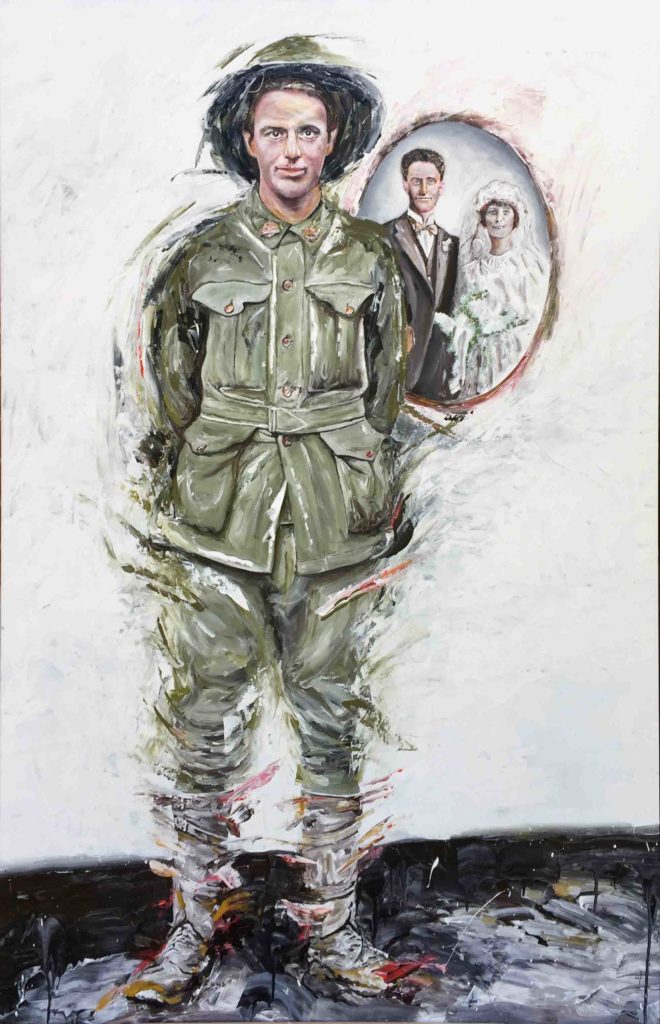
Clarence Aspinall
Clarence Aspinall’s story doesn’t begin with titles or aristocratic estates—it begins in Christchurch, New Zealand, where he was born into a modest but respected family in the late 1880s. His father was an Anglican minister, known for his calm authority and steady faith, and his mother came from a lineage of schoolteachers. Clarence inherited both their discipline and their quiet sense of duty.
In the years leading up to the First World War, Clarence moved to Australia, likely drawn by opportunity and the spirit of adventure. He was working in Adelaide when war was declared, and like many young men of his generation, he volunteered without hesitation. His enlistment papers describe him as steady, intelligent, and well-mannered—qualities that would define his service.
Clarence embarked with the 10th Battalion in early 1915 and was among the first Australians to land at Gallipoli. The weeks that followed were marked by exhaustion, confusion, and constant shellfire. He was wounded not long after the landing and evacuated to Egypt for treatment. Records suggest he spent several months recovering in military hospitals before rejoining the war effort on the Western Front.
In France, Clarence was transferred to the 48th Battalion, a unit made up largely of South Australians and veterans of Gallipoli. By 1917, he had risen to the rank of Corporal. He was commended for his reliability under fire during operations near Messines and Passchendaele, where battalion diaries mention his role in maintaining communications under intense artillery bombardment.
Unlike some soldiers who returned home broken or embittered, Clarence carried his war quietly. After the Armistice, he settled in Perth and married Edith Marian, a nurse he had met while recovering in Cairo. He took up a position in the public service, eventually working with the Department of Repatriation, helping returned soldiers navigate civilian life.
He never sought recognition or accolades, but his name appears on veterans’ association rolls, and those who knew him described him as thoughtful, methodical, and kind. He was a fixture at local RSL events, though he rarely spoke of the war.
Clarence Aspinall died in 1962 and was buried with military honours in Karrakatta Cemetery. He left behind three children and a quiet legacy of strength, humility, and service—qualities not recorded in peerage books, but remembered just as deeply by those whose lives he touched.